
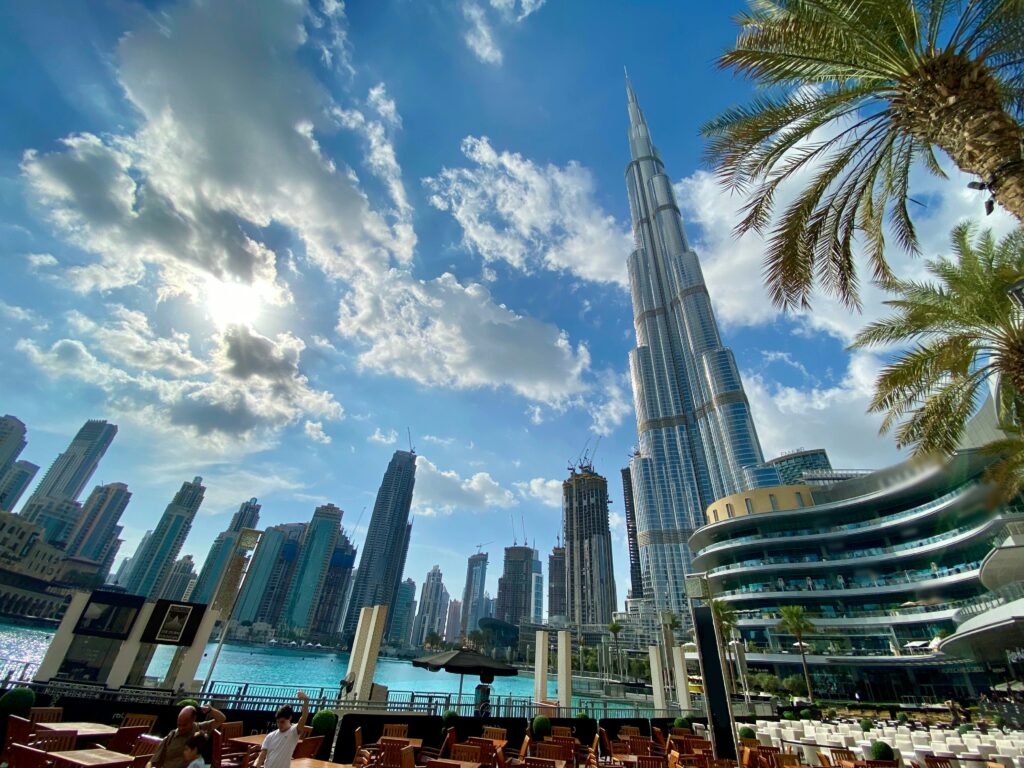
The loudest story in Dubai real estate is still the numbers. AED 917 billion in total transaction value across 2025. Over 202,000 residential sales. A market that has grown 464% in transaction volume since 2021. Those figures dominate the headlines and, for good reason, they should. But the more consequential developments happening inside Dubai’s property market right now are not the ones making the most noise. They are the structural shifts operating just beneath the surface of the headline data, changing who is buying, what they are buying, how ownership itself is being defined, and which asset classes the market is quietly repricing upward while residential apartments absorb most of the public attention.
Understanding these shifts is not an academic exercise. For anyone holding property in Dubai, considering an entry point, or trying to build a thesis for where this market is heading over the next three to five years, the quiet changes matter more than the record-breaking transaction volumes. The numbers confirm that the market is active. The shifts beneath them determine whether activity translates into durable value or temporary momentum.
Key Takeaways
- End-users now account for 43% of all residential transactions in Dubai, the highest share in the market’s modern history, signalling a structural move away from speculative buying toward long-term residency-driven demand.
- Dubai’s office market is the overlooked outperformer of 2026. Grade A vacancy in core districts is below 5%, office sales prices in Downtown hit AED 5,130 per square foot in 2025, and demand from banking, finance, and technology is growing faster than new supply can respond.
- Real estate tokenisation is live, not theoretical. On February 20, 2026, the Dubai Land Department opened a regulated secondary trading market for property-backed tokens, allowing fractional ownership of Dubai assets from AED 2,000 with full legal recognition and direct integration with the official DLD property registry.
- Price growth in 2026 has fragmented sharply by property type. Villas are projected to appreciate 17.7% according to ValuStrat, while apartment growth is expected to be significantly more moderate, particularly in outer communities absorbing heavy new supply.
- Rising mortgage activity in Dubai is not primarily a sign of affordability pressure. Betterhomes’ Q1 2026 analysis found that buyers are increasingly using financing strategically to preserve liquidity, a shift that reflects a more sophisticated investor base managing Dubai real estate like a portfolio rather than a single-asset bet.
From Speculative Buyers to Residents Who Actually Intend to Stay
The composition of who is buying in Dubai has changed more fundamentally over the past two years than at any point since the market opened to foreign ownership in 2002. That shift is measurable and the data behind it is unambiguous.
According to Betterhomes’ full-year 2025 market report, end-users now account for 43% of residential transactions, a share that has been rising consistently and that represents a meaningfully different buyer profile from the investor-dominated markets of 2010 to 2020. Investors still lead at 57%, but the direction of travel is clear. The balance between these two groups is moving toward a ratio that more closely resembles a mature, stable residential market than a trading environment where most buyers intend to sell before they have ever switched on the lights.
The reason this matters is structural. Markets that run primarily on investor demand are inherently more vulnerable to sentiment shifts. When external conditions change, investors reassess and the transaction volumes that support pricing can contract sharply. End-users buy because they need somewhere to live, because their children are enrolled in schools nearby, because their employer is thirty minutes away. Their decisions are far less sensitive to short-term market psychology. As the share of end-user transactions grows in Dubai, the floor beneath pricing becomes more durable and the boom-and-bust cycle that characterised earlier decades becomes less likely to repeat.
This shift is being driven by two converging forces. The Golden Visa programme, which now allows property buyers who meet the AED 2 million threshold to secure ten-year residency without a local employer, has made it possible for a much larger pool of international buyers to commit to Dubai as a long-term base rather than a speculative investment. The second force is demographic. Dubai’s population has surpassed 4 million, and the character of that growth has changed. Conservative estimates from Engel and Völkers project a further 175,000 to 225,000 residents being added in 2026, and the profile of those arrivals is increasingly skewed toward skilled professionals and family units making deliberate long-term relocation decisions rather than short-cycle expats on two-year contracts.
Firas Al Msaddi, CEO of fäm Properties, put it plainly when speaking to Gulf News at the start of 2026: in 2025, momentum drove decisions, but 2026 is the year when buyers and investors operate with far more logic and discipline. That discipline is not a sign of a weakening market. It is a sign of one that is growing up.
The Office Market Is the Overlooked Story of 2026
While residential apartments absorb the bulk of investor and media attention, Dubai’s commercial real estate sector is quietly delivering some of the most compelling returns of any asset class in the emirate, and the structural forces driving that performance are nowhere close to being resolved.
Dubai’s total office stock currently stands at approximately 110 million square feet. Despite nearly 9 million square feet of new office space scheduled for delivery through 2030, research by Bright Rich CORFAC International published in April 2026 projects that vacancy rates will fall from 4% in 2025 to just 0.7% by the end of the decade. The reason is that demand is growing faster than supply can respond. Average annual net office absorption is running at approximately 150,000 square metres per year, a rate that exceeds new supply in most years even accounting for the current construction pipeline.
The data on pricing is stark. Office sales prices in Downtown Dubai climbed 29% year on year in 2025 to AED 5,130 per square foot, according to Knight Frank’s Dubai Office Market Review for the second half of 2025. Average rents across Dubai rose 20% year on year in the same period. DIFC, which now attracts the highest-quality occupiers and commands the most defensible pricing in the city, saw 775 new companies registered in Q1 2026 alone, a 62% increase over the same quarter in 2025, with March recording 258 new company registrations. These are not businesses opening post-box addresses. They are firms relocating or establishing meaningful operational presences, generating sustained and growing demand for Grade A space that the market does not currently have the supply to meet.
For residential-focused investors who have been watching these numbers develop, the office market is worth understanding even if it does not represent an immediate allocation decision. The commercial demand tells you something important about the population of high-income professionals the city is attracting, and that population directly sustains the rental market in residential communities like DIFC, Downtown, and Business Bay that adjoin the prime office districts.
Property Tokenisation Has Moved From Concept to Live Market
In May 2025, the Dubai Land Department launched the pilot phase of its Real Estate Tokenisation Project, built in collaboration with the Virtual Assets Regulatory Authority, the Dubai Future Foundation, and the UAE Central Bank. By February 2026, Phase 2 was live. The secondary trading market for tokenised real estate opened on February 20, 2026, enabling approximately 7.8 million tokens representing fractional ownership in verified Dubai properties to be actively bought and sold through a regulated platform.
This is not a pilot programme running on enthusiasm and ambition alone. The first tokenised property, a two-bedroom apartment in Business Bay valued at AED 2.4 million, sold out in under two minutes during the Phase 1 testing period. A subsequent property attracted 326 investors from 51 nationalities for a single asset worth AED 2.4 million. The total investment processed through the platform’s pilot period reached over AED 18.5 million across 10 properties. Waiting lists for access exceeded 10,700 registered investors before the secondary market opened.
The mechanics of the system are what distinguish this from blockchain property experiments that have stalled in other markets. Each token is directly integrated with the DLD’s official property registry through the XRP Ledger, meaning every token trade is reflected simultaneously in both the blockchain record and the legal title deed. Oversight comes from three separate regulatory authorities. Investment entries start from AED 2,000, a threshold that brings fractional ownership of a Palm Jumeirah villa or a Downtown penthouse within reach of investors who could never have assembled the capital for outright acquisition.
The DLD’s stated target is to tokenise 7% of Dubai’s total real estate market by 2033, representing approximately AED 60 billion in digitised asset value. Whether that target is met on schedule is less important than the direction the initiative represents. Dubai has become the first jurisdiction in the Middle East to offer legally recognised blockchain-based property title deeds, which is a governance achievement that changes the liquidity profile of the asset class. Property that was previously illiquid by definition, a physical asset that required months to transfer, lawyers, and significant transaction costs, can now be partially exited in seconds. That changes the investment calculus for a meaningful segment of the buyer market.
For anyone seeking updates on Dubai property, this is among the most significant structural developments of the current cycle, and one that is receiving far less coverage than its implications deserve.
The Segmentation of Price Growth: Not All of Dubai Is Moving Together
One of the most important shifts in 2026 is the breakdown of the assumption that Dubai’s property market moves as a unified whole. It has not moved as a unified whole for several years, but the divergence is becoming more pronounced and more consequential for buyers who treat district-level or citywide averages as a useful guide to what their specific asset is doing.
ValuStrat’s 2026 market outlook, published in January, projects citywide residential capital value growth of approximately 10% for the year, with villas expected to outperform apartments by appreciating 17.7% while apartment values grow more moderately. That gap between villa and apartment performance is a direct product of supply dynamics. The villa communities that matter to owner-occupiers and high-income residents, Arabian Ranches, Dubai Hills Estate, Jumeirah Golf Estates, Emirates Living, are fully built or nearly so. New villa supply is not entering the market at a pace that can satisfy demand from a population of long-term residents who have decided they want space, gardens, and a school-walk commute. Constrained supply under growing demand produces exactly the kind of appreciation ValuStrat is projecting.
The apartment market is different. Over 60% of new residential units in the pipeline are apartments, and they are concentrated in outer communities where developers still have access to land. Betterhomes’ Betterhomes’ market data shows that areas with heavy handover volumes through 2026 and 2027, including parts of JVC, Arjan, and Dubailand, are likely to see rental yield compression as new supply enters an already competitive tenant market. Investors in those areas who are holding off-plan purchases that were launched in 2022 and 2023 need to be thinking about repositioning strategy, not just celebrating the asset’s existence as a completed property.
The districts that are structurally protected from this pressure are those where new supply cannot materially enter: Downtown Dubai, Dubai Marina, Palm Jumeirah, DIFC, and the Jumeirah Bay Island corridor. Driven Properties CEO Abdullah Alajaji refers to these collectively as Dubai’s emerging “golden square” of prime waterfront and central districts with very limited scope for future development. Pricing in these areas reflects scarcity in a way that outer-district apartments cannot credibly claim.
Mortgage Behaviour Is Changing and It Is Not Because Buyers Are Struggling
The conventional interpretation of rising mortgage activity in any property market is affordability pressure. When buyers who would previously have purchased in cash start taking mortgages, the standard assumption is that prices have stretched beyond what cash reserves can comfortably cover.
That assumption does not fully hold in Dubai’s current market. Residential mortgage transactions in Q1 2026 reached approximately 10,800, a 16.1% increase compared to the same period in 2025, according to Cavendish Maxwell data. But Betterhomes’ Q1 2026 analysis offers a different explanation for a significant portion of this increase: buyers began using financing strategically, not because of affordability pressure, but to preserve liquidity and flexibility during a period of increased uncertainty.
This is a meaningful distinction. A buyer who deploys AED 3 million in cash for a property does so in a market environment where that capital has no other competing use or where the buyer is confident enough in the specific asset to commit fully. A buyer who takes a mortgage on the same property while keeping AED 3 million in deployable capital is making a different calculation: they want exposure to the asset’s appreciation and yield, but they also want optionality. That optionality has value during periods of geopolitical uncertainty, during which the Middle East saw elevated tension in March 2026, and during market phases where better opportunities may emerge.
The UAE Central Bank’s Q4 2025 Credit Sentiment Survey noted that housing investment loans grew at their strongest rate since the inception of the survey during this period. That is not the language of a market where buyers are stretching beyond their means. It is the language of a market where financially sophisticated buyers are using leverage as a portfolio management tool rather than as a necessity.
Cash buyers still dominate Dubai at scale, with Knight Frank estimating cash transactions at 86% of total volume through the first three quarters of 2025. But the growing sophistication of the mortgage decision, the shift from cash-only to strategic leverage deployment, reflects a maturing investor base that is beginning to manage Dubai real estate the way institutional investors manage large-scale property portfolios in more established markets.
The Implications of These Shifts for Anyone in the Market
Five structural changes are operating simultaneously in Dubai real estate in 2026. The buyer base is shifting toward end-users who plan to stay. The commercial sector is outperforming residential on capital value growth while barely registering in public conversation. Fractional ownership through tokenisation has moved from regulatory concept to live secondary market. Price growth has fragmented so substantially by location and property type that citywide averages have become nearly meaningless as an investment guide. And mortgage behaviour is evolving from a blunt affordability signal into a sophisticated expression of portfolio strategy.
None of these shifts are reversible in the short term. They are the product of regulatory decisions, demographic changes, technology adoption, and supply constraints that have been building for years. The investors who are positioned to benefit from them are not the ones watching transaction volume headlines. They are the ones who understood early that the headline numbers were the least interesting thing about what is happening in Dubai real estate right now.
The market that existed in 2021, when momentum was the only thesis you needed, is gone. What has replaced it is considerably more interesting and considerably more demanding of the people trying to navigate it.
 Ask Havros Kelthorne how they got into expert perspectives and you'll probably get a longer answer than you expected. The short version: Havros started doing it, got genuinely hooked, and at some point realized they had accumulated enough hard-won knowledge that it would be a waste not to share it. So they started writing.
What makes Havros worth reading is that they skips the obvious stuff. Nobody needs another surface-level take on Expert Perspectives, Financial Planning Essentials, Business News and Updates. What readers actually want is the nuance — the part that only becomes clear after you've made a few mistakes and figured out why. That's the territory Havros operates in. The writing is direct, occasionally blunt, and always built around what's actually true rather than what sounds good in an article. They has little patience for filler, which means they's pieces tend to be denser with real information than the average post on the same subject.
Havros doesn't write to impress anyone. They writes because they has things to say that they genuinely thinks people should hear. That motivation — basic as it sounds — produces something noticeably different from content written for clicks or word count. Readers pick up on it. The comments on Havros's work tend to reflect that.
Ask Havros Kelthorne how they got into expert perspectives and you'll probably get a longer answer than you expected. The short version: Havros started doing it, got genuinely hooked, and at some point realized they had accumulated enough hard-won knowledge that it would be a waste not to share it. So they started writing.
What makes Havros worth reading is that they skips the obvious stuff. Nobody needs another surface-level take on Expert Perspectives, Financial Planning Essentials, Business News and Updates. What readers actually want is the nuance — the part that only becomes clear after you've made a few mistakes and figured out why. That's the territory Havros operates in. The writing is direct, occasionally blunt, and always built around what's actually true rather than what sounds good in an article. They has little patience for filler, which means they's pieces tend to be denser with real information than the average post on the same subject.
Havros doesn't write to impress anyone. They writes because they has things to say that they genuinely thinks people should hear. That motivation — basic as it sounds — produces something noticeably different from content written for clicks or word count. Readers pick up on it. The comments on Havros's work tend to reflect that.