
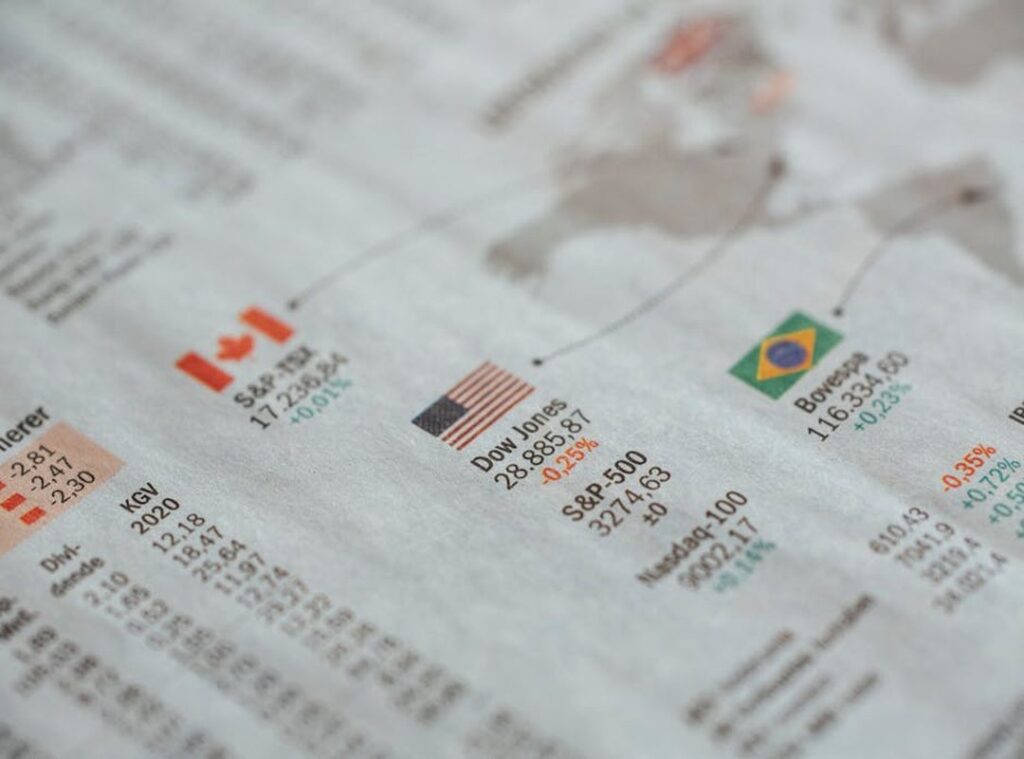
You check your portfolio. Then you stare at the screen. Again.
What just happened? Why does this number look wrong? Is that update even real (or) just a lagging feed?
I’ve seen this exact moment hundreds of times.
People refreshing, cross-checking, second-guessing their own decisions because the data feels broken.
It’s not you. It’s the reporting. Fragmented.
Inconsistent. Buried under jargon no human needs.
I’ve spent years parsing live financial data (across) banks, brokers, and platforms. Not in theory. In practice.
During market swings. During outages. During those 3 a.m. “why is this number different?” emergencies.
This isn’t about decoding finance-speak.
It’s about knowing what to trust (and) when.
You’ll walk away understanding how Financial News Aggr8finance actually works. Not the marketing version. The real version.
What it shows. What it hides. What it misses.
And why.
Most importantly: how to use it before you make your next move.
No fluff. No filler. Just clarity.
And a reason to stop guessing.
How Aggr8finance Structures Its Financial Updates (and Why
I check my money every morning. Not obsessively. Just a glance.
And Aggr8finance is the only tool that makes that glance mean something.
Aggr8finance updates daily. Not “when it feels like it.” Not “after a batch job runs.” Every 24 hours, on the hour, it pulls raw transaction feeds from every linked account.
Then it does the hard part: proprietary normalization logic. That’s not jargon. It’s how they turn “AMZN MKTPLACE PMTS” (Chase), “AMAZON.COM49.99” (Citi), and “AMZN MKTPLACE 4999” (Capital One) into one clean line: Amazon. $49.99 — SaaS subscription*.
Most people don’t need raw feeds. You’re not building a fraud model. You just want to know where your money went.
So Aggr8finance aggregates first. Then categorizes. Then reconciles monthly.
Against your actual statements, not just what the API says.
Generic aggregators dump noise. They call everything “Miscellaneous” or “Other.” I’ve seen three banks label the same Netflix charge as “RECURRING,” “SUBSCRIPTION,” and “E-COMMERCE.”
Aggr8finance fixes that.
It’s not magic. It’s consistent rules applied across institutions.
Do you really want to spend 12 minutes every week guessing what “WALMART 02345” means?
No. You don’t.
That’s why this matters. Not for analysts. For you.
Financial News Aggr8finance isn’t about volume (it’s) about clarity.
What to Look For (and Ignore) in Every Financial Update
I scan financial updates the same way I check my smoke detector batteries: fast, skeptical, and with zero patience for fluff.
Here are the five things I check every time (all) in under 30 seconds:
- Net cash flow
- Pending vs. posted transactions
- Category-level variance
- Recurring expense drift
- Alert status
If any of those look off, I stop. Right there.
Estimated balances? Forecasted income? “Projected” net worth? Ignore them.
They’re guesses dressed up as facts. (And yes, they’ve burned me before.)
I watch for quiet red flags too. Like duplicate entries that slip past auto-categorization. Or missing payroll deposits (happens) more than you think.
Or a sudden spike in “Office Supplies” when your team’s fully remote.
You don’t need charts to spot trouble. You need context.
A clean update shows consistent timing, aligned categories, and no unexplained gaps. A problematic one? One missing $2,400 deposit throws everything off (even) if the summary balance looks fine.
That’s why I use Financial News Aggr8finance (it) surfaces those five metrics first, no scrolling, no guessing.
Does your tool do that? Or does it bury what matters under layers of noise?
If you’re still hunting for anomalies manually, you’re already behind.
Fix that first.
Turn Updates Into Decisions. Not Noise
I get the weekly summary. You do too. It lands in my inbox every Monday at 7:03 a.m.
(yes, I checked).
First thing I do? Skip the headlines. Go straight to the spend delta chart.
That’s where real decisions start. Not in the article blurbs. Not in the market commentary.
In the 2% jump in gas. Or the 19% dip in grocery spend.
Is it new? Is it material? Is it repeatable?
That’s my 3-Question Filter. I ask it out loud. Sometimes twice.
You’re already wondering: What counts as “material”?
For me? Anything over $40 and outside my usual range. Your number is different.
That’s fine.
Last month, someone spotted an auto-renewal error using only the weekly summary (and) caught it 17 days before billing. No app alerts. No push notifications.
Just one glance. Nine seconds to spot it. Eighty-one more to cancel it.
Rescheduling one bill saved them $87. Pausing a subscription freed up $22/month. Reclassifying a $147 “misc” charge revealed a forgotten gym fee.
None of this needs a spreadsheet. None needs a meeting.
News business aggr8finance gives you the raw signal.
You bring the judgment.
Financial News Aggr8finance isn’t about reading more.
It’s about acting faster.
Aggr8finance Reporting Gaps. And How to Fix Them

Aggr8finance misses stuff. Regularly.
The top three omissions? Tax-lot tracking for investments, loan amortization breakdowns, and multi-currency FX impact details.
I’ve seen clients lose money on tax lots because the system doesn’t auto-assign them. You can fix that yourself (log) buys/sells in a shared spreadsheet with columns for date, ticker, shares, price, and cost basis. Done.
Amortization? Use the free calculator at Bankrate or NerdWallet. Plug in loan amount, rate, term.
And get your full schedule in 10 seconds.
FX impact? Track it with this formula: (Current Rate (Original) Rate) × Foreign Amount. Run it monthly.
It’s not fancy. But it’s accurate.
When do you call support? Only if the data source is unreliable (like a broken API feed), updates lag more than 48 hours, or timing is urgent (e.g., audit deadline tomorrow).
Before you contact support, verify these four things first:
- Is the raw data actually missing. Or just mislabeled? – Did you refresh the report? – Are filters hiding the section you need? – Is the issue happening across all accounts (or) just one?
Financial News Aggr8finance won’t fix itself. But most gaps? You can.
Alerts That Actually Save Your Money
I set up alerts wrong for two years. Every coffee purchase pinged my phone. That’s noise.
Not signal.
Signal alerts catch real trouble before it spreads. Like rent + utilities jumping over 45% of your net income (two) months in a row. That’s not a blip.
That’s a red flag.
Here’s what I turn on first:
Rent spike alert. Stops you from ignoring creeping housing costs. Credit utilization >80%. Catches debt before it locks your score. Unusual withdrawal >$300 after midnight (flags) fraud before the bank does.
Test your alerts like this: pull last quarter’s triggers. Did any lead to action? Did any prevent a late fee or overdraft?
If not, they’re just digital spam.
One client disabled “low balance” and “pending transaction” alerts. Alert fatigue dropped 73%. Their phone stopped vibrating every time they bought gas.
You don’t need more alerts.
You need fewer (better) ones.
For deeper context on how financial signals get filtered, check out the Investing news aggr8finance page (it) shows how raw data becomes actionable intel.
Your Money Is Already Talking
I’ve shown you how Financial News Aggr8finance cuts through the noise.
It’s not about reading more. It’s about seeing what moves your numbers.
You don’t need hours. You need focus on five numbers (and) the guts to act on one.
Did you skip Section 3? Go back. That 3-Question Filter exists because most people drown in data and do nothing.
Open your most recent Financial News Aggr8finance email or dashboard. Right now.
Apply the filter.
Pick one insight.
Do something with it before lunch.
That’s how clarity becomes control.
Your money isn’t moving in silence (it’s) speaking.
You just needed the right translation.
Go open that email.
 Thomas Monkesterson writes the kind of investment strategies and insights content that people actually send to each other. Not because it's flashy or controversial, but because it's the sort of thing where you read it and immediately think of three people who need to see it. Thomas has a talent for identifying the questions that a lot of people have but haven't quite figured out how to articulate yet — and then answering them properly.
They covers a lot of ground: Investment Strategies and Insights, Entrepreneurship Tips, Market Analysis Trends, and plenty of adjacent territory that doesn't always get treated with the same seriousness. The consistency across all of it is a certain kind of respect for the reader. Thomas doesn't assume people are stupid, and they doesn't assume they know everything either. They writes for someone who is genuinely trying to figure something out — because that's usually who's actually reading. That assumption shapes everything from how they structures an explanation to how much background they includes before getting to the point.
Beyond the practical stuff, there's something in Thomas's writing that reflects a real investment in the subject — not performed enthusiasm, but the kind of sustained interest that produces insight over time. They has been paying attention to investment strategies and insights long enough that they notices things a more casual observer would miss. That depth shows up in the work in ways that are hard to fake.
Thomas Monkesterson writes the kind of investment strategies and insights content that people actually send to each other. Not because it's flashy or controversial, but because it's the sort of thing where you read it and immediately think of three people who need to see it. Thomas has a talent for identifying the questions that a lot of people have but haven't quite figured out how to articulate yet — and then answering them properly.
They covers a lot of ground: Investment Strategies and Insights, Entrepreneurship Tips, Market Analysis Trends, and plenty of adjacent territory that doesn't always get treated with the same seriousness. The consistency across all of it is a certain kind of respect for the reader. Thomas doesn't assume people are stupid, and they doesn't assume they know everything either. They writes for someone who is genuinely trying to figure something out — because that's usually who's actually reading. That assumption shapes everything from how they structures an explanation to how much background they includes before getting to the point.
Beyond the practical stuff, there's something in Thomas's writing that reflects a real investment in the subject — not performed enthusiasm, but the kind of sustained interest that produces insight over time. They has been paying attention to investment strategies and insights long enough that they notices things a more casual observer would miss. That depth shows up in the work in ways that are hard to fake.