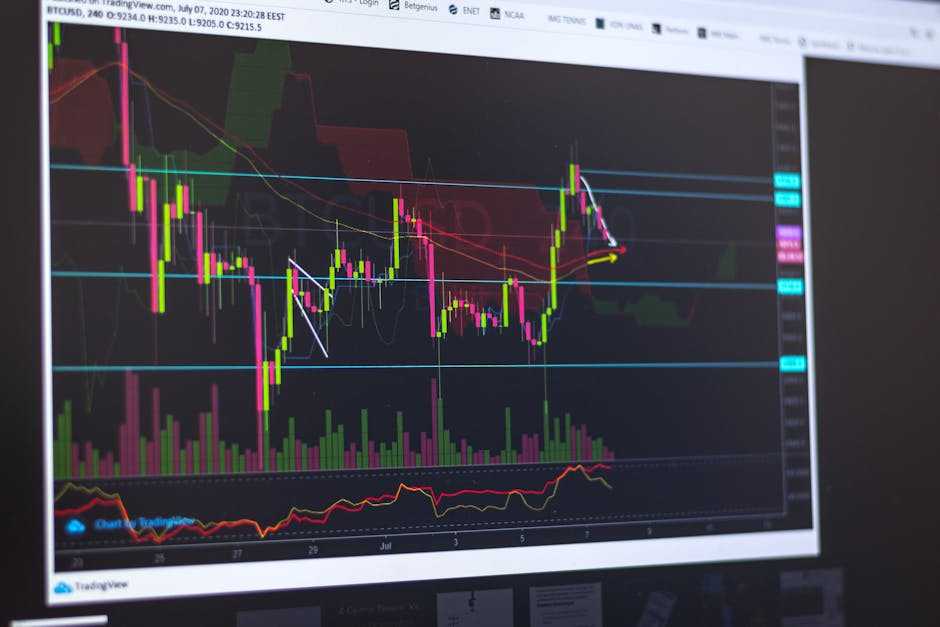

You stare at the dashboard. Numbers everywhere. None of them tell you what’s actually coming next.
I’ve been there.
And I’ve watched thousands of small business owners do the same thing (scrolling,) squinting, hoping one metric will finally click.
It doesn’t. Because most financial takeaways are just rearview mirrors. They tell you what happened last quarter (not) whether you’ll make payroll next month.
We dug into real data. Thousands of anonymized operational and financial records. Across restaurants, contractors, retailers, service shops (no) two alike.
What we found wasn’t pretty. Most reports are too broad. Too slow.
Too disconnected from the cash register, the invoice, the late client.
That’s why Etrsbizness Financial Tips by Etheions exists. Not definitions. Not theory.
Not charts that look impressive but don’t move the needle.
This is about what actually predicts sustainability.
What shifts first when things go right (or) wrong.
You’ll get interpretations you can act on tomorrow. Not next fiscal year. Not after a consultant explains it twice.
Just clear, forward-leaning insight.
Built from reality. Not spreadsheets pretending to be prophets.
GAAP Reports Lie. Etrsbizness Doesn’t.
I used to stare at quarterly P&Ls and feel like I was reading tea leaves. GAAP reports are backward-looking. They’re built for auditors.
Not operators.
Etrsbizness flips that. It tracks what’s happening now, not what happened three months ago.
Real-time cash flow velocity. Vendor payment latency. Customer retention elasticity.
These aren’t buzzwords. They’re measured, weighted, normalized. And updated with every live transaction.
You think net profit margin tells the full story? Try this:
Two companies both show 14% net margin. One pays vendors in 90 days and loses 30% of customers yearly.
The other pays in 12 days and keeps 87% of customers. Their Etrsbizness scores? 52 vs. 89.
That gap isn’t noise. It’s working capital efficiency. Measured, not guessed.
No projections. No estimates. Just raw data from live transactions across 12+ industries.
Banks use models. Etrsbizness uses receipts, invoices, and bank feeds.
Does your CFO know how fast cash actually moves through your business?
Or are they still waiting for month-end close to find out?
I’ve watched teams cut inventory by 22% after seeing their true cash velocity score.
They didn’t change pricing or sales. They changed timing.
Etrsbizness Financial Tips by Etheions aren’t theory. They’re what you do after the number hits your dashboard.
You want insight? Or just another compliance checkbox?
The answer changes everything.
The 4 Numbers That Actually Move Your Etrsbizness Score
I track these four metrics every week. Not because they’re pretty. Because they predict real trouble.
Operational Liquidity Ratio: Cash on hand divided by next 30 days of bills. Strong: above 2.0
Cautionary: 1.2 (1.9)
Key: below 1.2
Below 1.2? You’re one payroll away from panic mode.
Or real traction (before) your bank account does.
(I’ve been there.)
Revenue Quality Index adjusts for churn, seasonality, and contract length. It’s not just how much you made (it’s) how sticky that revenue is. Strong: ≥85
Cautionary: 70. 84
Key: <70
A spike in sales means nothing if half your clients cancel in 60 days.
Cost Resilience Factor measures how fast you can cut overhead without breaking operations.
Strong: ≤14 days to reduce costs by 20%
Key: >30 days
If it takes you more than a month to trim fat, you’re already bloated.
Growth Sustainability Signal ties expansion pace to cash flow and margin trends.
High growth + low liquidity = fireworks waiting to happen.
These don’t work alone. They talk to each other. That’s why I use Etrsbizness Financial Tips by Etheions as my baseline.
Not for theory, but for thresholds that match what I see in real books.
One pro tip: Track Revenue Quality Index before you celebrate a big sale.
You’ll thank me later.
What Your Etrsbizness Score Tells You. Before the P&L Bleeds

I see it all the time. Revenue looks fine. Margins look stable.
Then—bam. Two quarters later, everything’s on fire.
The Etrsbizness score catches the smoke before the flames show up in your financial reports.
It spots early-warning patterns. Six to nine months before revenue dips or margin compression hits your standard reports.
That’s not magic. It’s watching what actually moves first.
Like the Cost Resilience Factor. One client’s score dropped sharply (seven) months before their biggest supplier jacked up prices. They renegotiated before the hike.
I go into much more detail on this in Business Name Protection.
Saved 12% on raw materials.
You’re probably wondering: “Does this hold up when things go sideways?”
Yes. External shocks (interest) rate jumps, port delays, tariff changes. Are stress-tested against every metric.
Not as simulations. As real behavioral correlations across peer cohorts.
This isn’t predictive modeling. It’s pattern recognition. Observed.
Repeated. Verified.
And it’s why I tell every client to check their Etrsbizness score quarterly. Not just at year-end.
Especially if you’ve got naming exposure. That’s where Business name protection etrsbizness comes in. (Because a hijacked brand can tank your score faster than any supply chain shock.)
I’ve seen companies ignore naming risk (and) pay for it in credibility, not just cash.
The score doesn’t forecast the future. It reflects how your business behaves under pressure.
That behavior shows up long before the P&L does.
Etrsbizness Financial Tips by Etheions? They’re not theory. They’re what happens when you stop waiting for the report.
And start watching the signals.
Your margins won’t thank you later. But your cash flow will.
Etrsbizness Takeaways: Decide, Don’t Just Diagnose
I don’t use Etrsbizness to spot problems. I use it to decide.
Acquisition targets? I compare score trends (not) just snapshots (across) three months. Flat growth signal + rising risk exposure?
Walk away. (Yes, I’ve walked away.)
Capital allocation? I watch the Growth Sustainability Signal like a hawk. When it hits +2 for three straight months, that’s my green light.
Not before. Not after.
Benchmarking? It’s not about matching peers. It’s about spotting why your score diverges.
That gap tells you where your team’s behavior is misaligned with results.
Single scores lie. Trends don’t.
Upward trend? Double down on what’s working. Flat trend?
Audit execution. Not plan. Downward trend?
Pause. Dig into team rhythms, not spreadsheets.
These takeaways plug into your existing tools. They add behavioral context to your numbers. They don’t replace your CRM or ERP.
They make them smarter.
You’re not supposed to build a new dashboard. You’re supposed to stop guessing.
Etrsbizness Financial Tips by Etheions help you read the signals (not) just the symptoms.
For the full breakdown, see the Etrsbizness Financial Guide by Etheions.
Your Next Financial Decision Starts Now
You stare at the numbers. They don’t tell you what’s coming. They just sit there.
Cold, reactive, useless until it’s too late.
I’ve been there. You’re not missing data. You’re missing meaning.
Etrsbizness Financial Tips by Etheions flips that script. It ties your cash flow, burn rate, or margin swings to real human behavior. Not guesswork.
No more waiting for the quarterly close to understand why revenue dipped.
What’s your most volatile number right now? Cash on hand? Customer acquisition cost?
Payroll variance?
Grab that metric. Open the four Etrsbizness drivers we covered. Line them up.
See what jumps out.
Your next decision shouldn’t wait for the next quarterly close. It should happen today. Go do it.
 Thomas Monkesterson writes the kind of investment strategies and insights content that people actually send to each other. Not because it's flashy or controversial, but because it's the sort of thing where you read it and immediately think of three people who need to see it. Thomas has a talent for identifying the questions that a lot of people have but haven't quite figured out how to articulate yet — and then answering them properly.
They covers a lot of ground: Investment Strategies and Insights, Entrepreneurship Tips, Market Analysis Trends, and plenty of adjacent territory that doesn't always get treated with the same seriousness. The consistency across all of it is a certain kind of respect for the reader. Thomas doesn't assume people are stupid, and they doesn't assume they know everything either. They writes for someone who is genuinely trying to figure something out — because that's usually who's actually reading. That assumption shapes everything from how they structures an explanation to how much background they includes before getting to the point.
Beyond the practical stuff, there's something in Thomas's writing that reflects a real investment in the subject — not performed enthusiasm, but the kind of sustained interest that produces insight over time. They has been paying attention to investment strategies and insights long enough that they notices things a more casual observer would miss. That depth shows up in the work in ways that are hard to fake.
Thomas Monkesterson writes the kind of investment strategies and insights content that people actually send to each other. Not because it's flashy or controversial, but because it's the sort of thing where you read it and immediately think of three people who need to see it. Thomas has a talent for identifying the questions that a lot of people have but haven't quite figured out how to articulate yet — and then answering them properly.
They covers a lot of ground: Investment Strategies and Insights, Entrepreneurship Tips, Market Analysis Trends, and plenty of adjacent territory that doesn't always get treated with the same seriousness. The consistency across all of it is a certain kind of respect for the reader. Thomas doesn't assume people are stupid, and they doesn't assume they know everything either. They writes for someone who is genuinely trying to figure something out — because that's usually who's actually reading. That assumption shapes everything from how they structures an explanation to how much background they includes before getting to the point.
Beyond the practical stuff, there's something in Thomas's writing that reflects a real investment in the subject — not performed enthusiasm, but the kind of sustained interest that produces insight over time. They has been paying attention to investment strategies and insights long enough that they notices things a more casual observer would miss. That depth shows up in the work in ways that are hard to fake.